Yes, if the area beneath the deck has a clear way in and out, visible or treated glass, a dry food compartment and a floor you can clean. A feeder near an open side often works better than one tucked into a dark corner. Rule out enclosed porches, spots above a doorway and places where seed drops through boards into a cavity you cannot reach. The roof buys shelter only if run-off, collisions and ground waste are also manageable.
Stand where the feeder would hang
Look out from the proposed port towards the yard. Sketch the first clear opening a startled bird would see. Now turn and look for a second apparent opening that is actually a sliding glass door, basement window or reflection. A deck with a low ceiling, solid side panels and windows at the back can funnel a bird towards glass. A broad open side with a visible route to branches offers a much more workable layout.
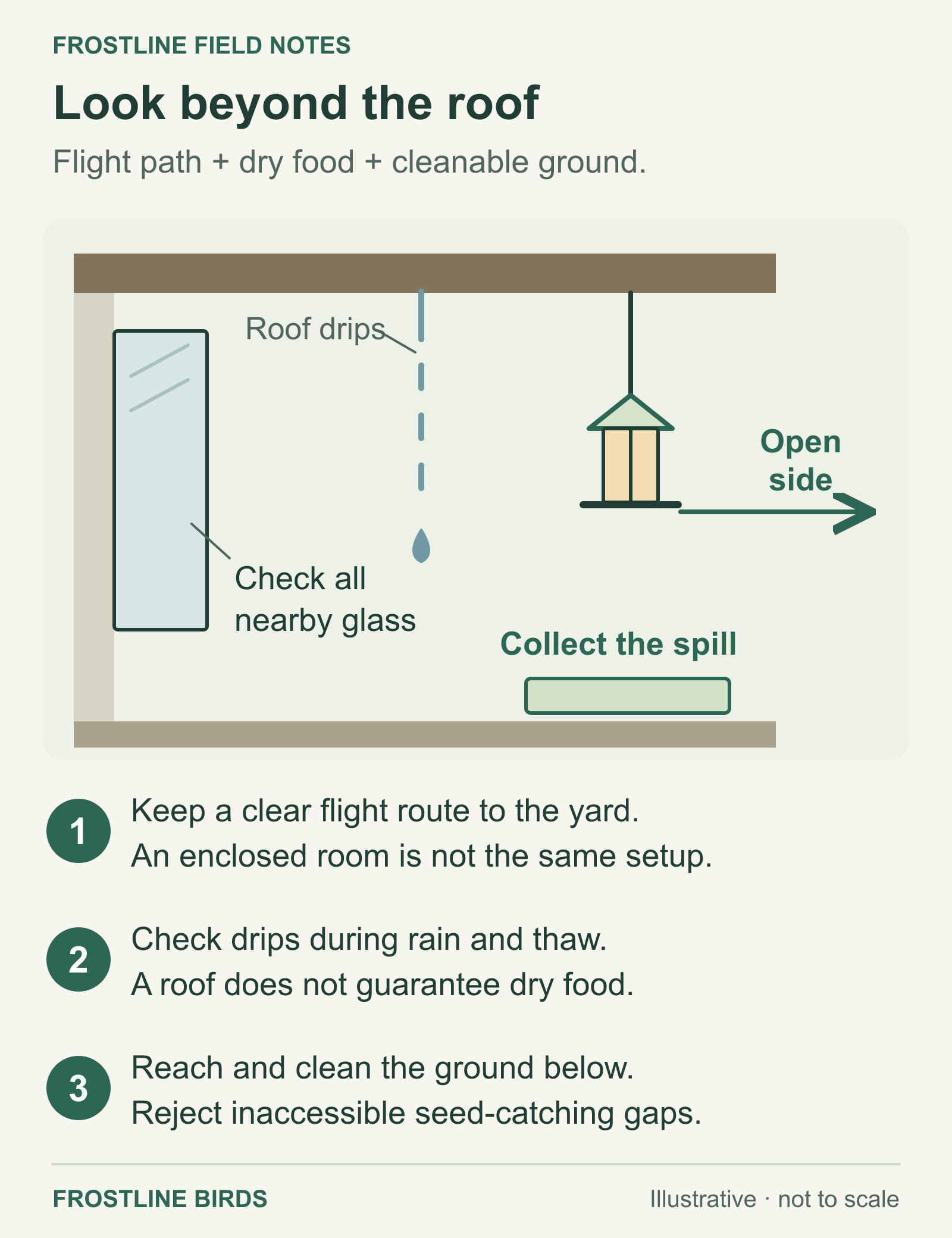
Visit at different times of day. A door that looks opaque from outside on a grey morning can reflect the yard when sunlight reaches the trees opposite it. Measure from the feeder to the glass itself, including panes around corners. If using a location close to the house, follow the window-distance guide and use an effective exterior treatment. Curtains inside do little for a reflection on the outside of the pane.
A screened or glazed room poses a different problem. A bird that enters through one open door may be unable to find that same exit again. Put the feeder entirely outside the enclosure. Check summer screens or roll-down weather panels too. A site that worked when both sides were open may become an enclosed flight corridor once the family closes the panels for winter.
Look up during rain and again during a thaw
A solid roof excludes rain coming straight down, but the dry footprint can be much smaller than the roof itself. Look underneath for wet lines at joints, a dripping gutter above the hanger and the splash mark where a downspout discharges near the floor. Under an upper deck made of spaced boards, many gaps may drip even when the upper surface looks nearly dry. Food below a drip line can stay wet long after the rain stops.
Put an empty washable dish at the proposed position during an ordinary shower if it can be secured against wind. Check the dish and the surface where the lowest port would sit. Repeat the observation after snow on the upper deck begins to melt. This is a simple way to locate drips, not proof that the position will stay dry in every storm. Collect the dish afterwards so it does not become a neglected water source.
Check both shelter and air movement. A sheltered corner that repeatedly leaves a wet tray all afternoon is a poor trade for one dry refill at the start of the day. If only the outermost port gets wet, compare an inward position with an orientation away from the incoming rain. Preserve the clear flight opening. The blowing-rain guide covers ports and guards if the roof alone does not protect food.
Decide where the spill will go
| Floor beneath the station | What to inspect | When to reject the site |
|---|---|---|
| Concrete or paving | Cracks, wall gaps, drainage channel, route for sweeping | Waste washes into a doorway or a drain you cannot clean |
| Deck boards over open ground | The ground beneath the gaps and access to it | Seed falls to a lower level that nobody can maintain |
| Gravel or mulch | How easily kernels disappear between stones or under cover | Food accumulates out of sight despite small portions |
| Shared patio or walkway | Where people sit, park strollers, enter or clear snow | Droppings, a falling feeder or tracked seed would affect other users |
Try a dry sweep of the proposed footprint before installing anything. If sweeping an empty site means moving a barbecue, several chairs and stored tools, you are unlikely to retrieve every spill in winter. A removable washable tray can catch some hulls, but it becomes another feeding surface with its own cleaning needs. It can also collect roof drips from outside the bowl’s original footprint. Evaluate the tray at its actual width.
Follow the edge of the floor towards the house. An opening under a step can receive a steady trickle of kernels even when the visible paving looks clean. Watch for repeated rodent traffic or gnawing and remove the food source if these appear. Keep the supply indoors in a secure container. Moving an open bag to the far end of the same sheltered deck leaves food there around the clock.
Keep the feeding surface clear of doors, heads and cats
Check the full door swing with somebody carrying a shopping bag or snow shovel. Nobody should have to duck under the feeder, step off the cleared path or push past the hanger. A windblown unit needs clearance from glass and posts in every position. Use a support and attachment approved for the filled load. An unidentified old hook in a soffit gives no reliable information about the fastening behind it.
Do not use a nearby chair, railing or deck box as a step to refill the feeder. Start with a position where both hands can work from stable ground. In a rental or shared building, establish permission before fitting hardware. Check the rental placement guide for a proposal that covers attachment, cleaning and removal. If roof penetration or a new structural fastening would be needed, consider a suitable independent support elsewhere instead.
Look for places a cat could wait behind storage boxes, lattice or the stairs. Watch what happens underneath the feeder as well as at its ports. Songbirds can land on the floor to collect scattered seed. If a cat regularly patrols the deck, pause feeding while access is addressed. The U.S. Fish and Wildlife Service identifies predation as one of the reasons to reconsider operating a feeder, especially where cats visit.
Run a small trial you can end promptly
Begin with one feeder and a small amount of fresh food. Write down what you see at the first refill. Are birds approaching from the open side and leaving cleanly? Is the seed dry all the way to the lowest ledge? Can you collect the spill before the next use of the patio? An untouched feeder on its first afternoon tells you little about discovery. Repeated flights towards glass, a wet clump of seed or an active cat under the feeder calls for an immediate change.
After a storm, check the water path before refilling. After snow clearing, make sure a bank has not blocked an exit or raised a cat’s access to a low perch. Check again when furniture or screens move. Under-deck conditions are shaped by household use as much as by the forecast. An otherwise good position may be seasonal if the space doubles as winter storage or a route for bringing in firewood.
If the only way to make the station work involves covering several openings, adding long restraints and continually cleaning inaccessible ground, take the feeder down. Move to a location where you can meet the same needs with less equipment. Keep the covered area for observing birds that visit the yard’s natural shelter.