In a small yard, start with the window and the space below the feeder. Choose one position where birds can see a route to cover, the glass is made visible, and you can collect spilled food without stepping into a bed or a neighbour’s path. Try one compact feeder there before adding a pole with several arms. If every available position brings birds into a cat’s hiding place or a hazardous window approach, leave the feeder out and use the space for bird-friendly planting.
Draw the ground you can actually use
Measure the rectangle or irregular patch available from inside the property. Draw the back door, gate swing, windows and path from the house to the gate. Mark where bins stand on collection day, where you put the shovel and where the snow goes after you clear the steps. The usable space on a January morning can be considerably smaller than the patio shown on a summer plan. A pole in the middle of the only safe footpath is already in the wrong place.
Now draw the area you can clean. A shallow planter under a feeder may be easy to see from indoors and difficult to empty once the soil freezes. A gap behind a shed can catch blown seed indefinitely. A patio may be easy to sweep while its outer edge drops husks into a neighbour’s basement stairwell. Shade in the parts where you can both see the waste and remove it. Choose the feeding footprint from that smaller area.
Mark glass on adjoining walls as well as your own back window. A transparent gate panel, a shed window reflecting a tree or a corner where two panes line up can all affect the escape route. Look from outside near feeder height. The view from your favourite chair says little about the reflection confronting a startled bird. The Canadian federal collision FAQ recommends siting feeders less than 1 m from windows and explains the limits of evidence for greater distances. Use exterior treatments appropriate to the entire hazardous pane.
Compare three positions in the same yard
Consider a hypothetical yard 4 m wide and 6 m long (about 13 by 20 ft). The house has a patio door at the near end. A cedar hedge occupies the left boundary, the gate opens inward at the right and a short paved area runs beside the house. Each spot below would support a feeder physically. Only an assessment of the rest of the yard shows which one is workable.
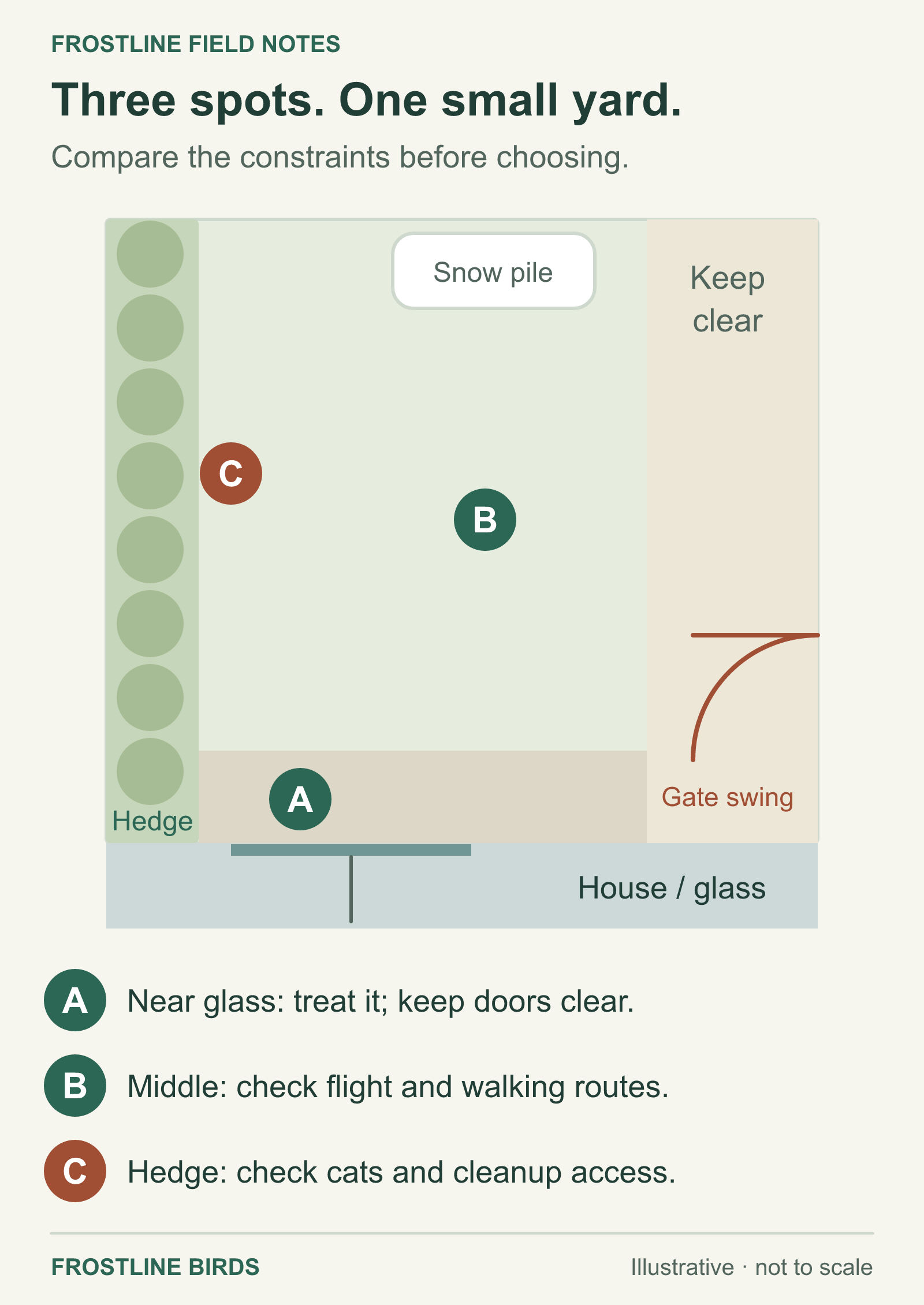
| Candidate | Where it helps | What could rule it out |
|---|---|---|
| Near treated glass beside the patio door | Short route to refill, easy-to-sweep paving, close placement by the pane | It obstructs the door, puts the spill area under foot traffic or leaves other reflective glass untreated |
| Freestanding pole near the middle | Clear view of birds coming and going, access from two sides | The arm reaches into the gate swing, or birds depart towards distant untreated glass |
| Hook on the hedge side | Green cover close by and some shelter | A cat can wait under the feeder or the ground below is inaccessible |
In that example the near-house spot might work if you can open the door fully, the outside glass is treated and the feeder stays clear of feet. If the whole wall is an untreated sliding door with no suitable solution, cross out that location. Resist moving the pole halfway towards the door as a compromise. Half the distance can leave the flight hazard and the obstructed path at the same time. The window-distance guide can help evaluate a different wall.
Fit the feeder to the remaining footprint
Mark the outer edge of the actual feeding surface on the plan. A single tube on a short compatible hanger might fit where a multi-arm pole cannot. A wide tray adds room for birds to stand, but it also puts seed farther over the edge of the cleanable area. Wind can carry hulls beyond either footprint. Start with the smallest arrangement that allows access to the food you intend to offer and lets you reach the base for cleaning.
Imagine taking the feeder down with gloves on. Is there room to raise the hanger off the hook without striking the glass? Can you set the unit into a basin without balancing it on a step? Can you reach the bottom port to look for wet seed from your side of the fence? A location that requires you to use a chair in summer is unlikely to improve after an overnight glaze of ice. Choose a serviceable height from stable ground and check the attachment instructions.
A hanging feeder can move beyond its still-weather outline. Check whether the widest edge could strike siding or glass or reach a neighbouring hook. If the available spot needs a long tether to stop the feeder hitting the wall, look for another mount the manufacturer supports. A projection over a shared entrance or the public side of a gate leaves no safe space beneath it if the unit comes loose.
Keep one escape route and one clear view underneath
Project FeederWatch suggests about 3 m (10 ft) from natural cover as a starting compromise. Many narrow lots cannot provide that distance on all sides. Look for one clear flight route to useful branches, and check that branches and fences do not give a predator access to the feeder. A small tree diagonally across the yard may serve birds better than the dense hedge immediately behind a port. The tree and fence clearance guide shows where to measure.
Check what happens on the ground when a bird drops a kernel. If the likely landing spot is behind an opaque pot or in a passage regularly used by a hunting cat, changing the feeder height alone leaves the ground risk intact. Move the spill zone into view or pause feeding if cats keep visiting. Increasing seed volume to attract birds to a poorly protected location makes an existing problem harder to manage.
Try the location through an ordinary household routine
Begin with an empty marker at the proposed position. Carry groceries past it, open the gate, move the bins and walk a full refill container from storage to the site. Do this under ordinary conditions without leaving loose equipment outside in bad weather. Move the marker while changes still cost only a few minutes. Check again from indoors to see whether you can watch the feeder and the ground at the same time.
Once installed, use a small fresh fill and inspect after the first busy period. Record where shells land, which direction birds take when disturbed and how much time it takes to restore the ground. If shells gather under the same gate hinge every day, try shifting the feeding surface towards the paving or reducing the served amount. If a bird hits glass, pause feeding at that position and address the glass immediately. A location that passes a tape-measure check still has to work with living birds.
After the first snowfall, check whether the shovel pile blocks your route and whether runoff freezes where you stand. If a smaller winter station keeps you from missing washes, store the extra equipment until spring. The cleaning frequency guide helps match the number of working feeders to the time and space available. Native plants, shelter and natural foods can use the remaining space even when a second feeder would compete for the only clear approach.